
Guide · 7 min read
How to keep the same face across AI comic panels
Why AI image tools change faces between images, and what actually keeps a character consistent across a whole comic: reference photos, character locking, and style choice.
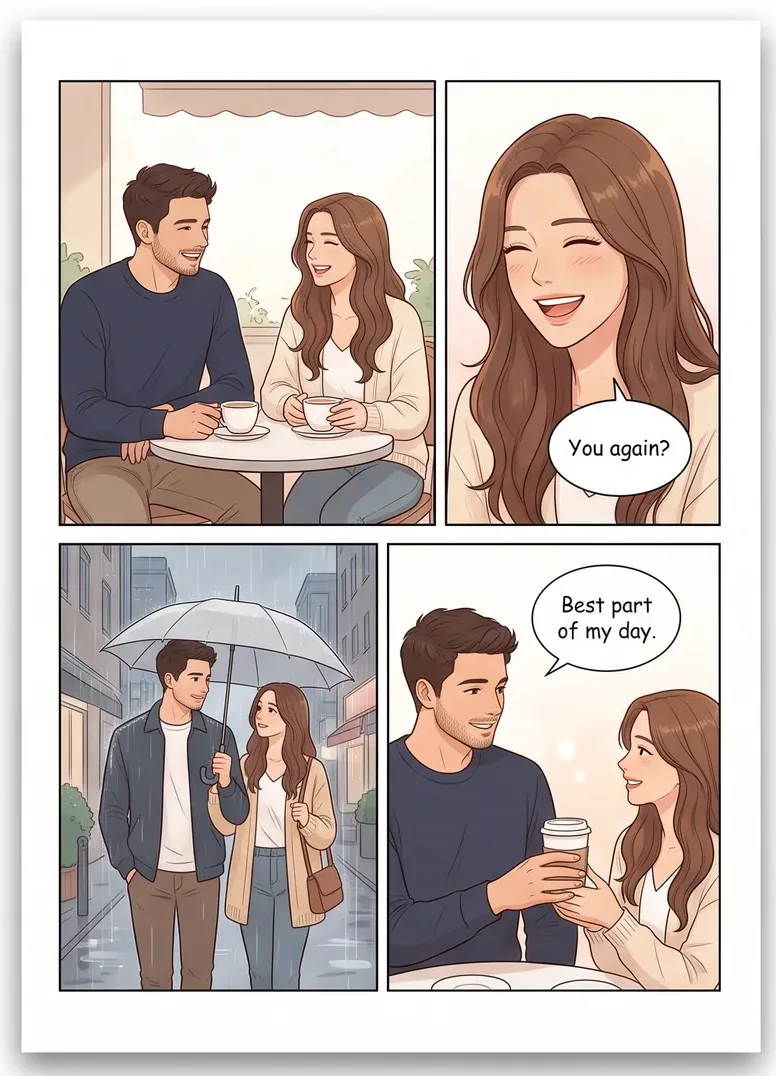
Why the face keeps changing
Most image generators treat every request as a new drawing. You ask for “a woman with long brown hair at a café”, and you get one, a different one each time. Even with the same prompt, small differences in the description produce different people, because the model is describing a type, not a person.
That's fine for a single picture. It breaks comics, where the same person has to appear in twelve panels, from wide shots to close-ups, in the rain and in a kitchen.
What actually works: a reference, not a description
The fix is to stop describing the person and start referencing them. A character built from a photo carries the face, hair, skin tone and proportions into every panel, and the story text only has to describe what they're doing. This is how Comikaze works: you upload a photo once, the character is locked, and every page is drawn against that reference.
- Upload a clear, front-facing photo per person.
- Keep names consistent in the story (“Sam”, not “my partner” in one line and “he” in the next).
- Reuse the same characters for sequels, the reference carries over.
Style matters more than people expect
Likeness survives best in styles with natural proportions and clean lines: manhwa, webtoon, slice-of-life, watercolor, realistic. Extreme stylisation, chibi heads, rubber-hose limbs, heavy caricature, keeps the *idea* of a person (hair, glasses, outfit) but loosens the face. Choose based on what the comic is for: a proposal wants likeness; a birthday roast can afford charm.
Three people is the practical limit
Each additional reference is another face the drawing has to hold in every panel. Up to three photo-based characters stays reliable; beyond that, describe the rest in the story instead of uploading photos. Background characters don't need to be consistent, the leads do.
When a panel drifts
Even with a locked character, one panel in a book can drift, usually an unusual angle or extreme lighting. Redraw that page with a short note rather than the whole comic. Adding “front-facing” or “close-up” to the note tends to snap the likeness back.